Why Does My Air Conditioner Smell Like Burning Plastic
When your AC makes a burning plastic or sharp electric smell when it kicks on, it is an immediate cause for concern. This odor can be caused by a failing motor, overheating wiring, or another electrical malfunction. While some faint, dusty odors are able to clear up quickly on their own, the strong or persistent smell of burning plastic is not normal.
To help you troubleshoot, we’ll cover basic safety steps, common causes, and what you can check on your own. If basic troubleshooting doesn’t work, Rogue Valley Heating, Cooling & Electrical offers 24/7 emergency repairs and same-day service.
What To Do First If Your AC Smells Like Burning Plastic
If you notice the odor of burning plastic, there are a few quick things you can do to prevent additional issues or safety risks.
- Immediately turn off your AC at the thermostat.
- If the odor is particularly strong, has an electrical scent, or is persistent, you should turn off power to the system at the breaker as long as it is safe to do so.
- You should immediately leave the area and call 911 if you notice a burning odor near your electrical panel, smoke, sparks, or flames.
- Do not continue running the system in the hope that the smell will go away.
- Never reset a tripped breaker repeatedly because repeated trips are a sign of an underlying electrical issue.
- Do not open your AC’s panels or touch any wiring.
- Call our heating, ventilation, and air conditioning (HVAC) experts for an inspection before you try using the system again.
Is a Burning Plastic Smell From an AC Dangerous?
Burning odors can be dangerous because they are often caused by melting wire insulation or overheated parts. Both of these problems can create a fire hazard. Additionally, burning plastic fumes can irritate your eyes, throat, and lungs.
The risk of harm is higher if the odor is especially sharp, acrid, or chemical-like. It’s also concerning if the smell is stronger near your air handler, outdoor unit, breaker, or vents.
If the smell does not fade away quickly or it returns, immediately shut off your system. Then, schedule professional HVAC services.
Causes of Burning Plastic Odors Coming From Your AC
There are a few common reasons why your AC might produce a burning plastic odor.
1. Overheating Electrical Wiring
AC systems rely on wiring, circuit boards, relays, contactors, and connections to function. All of these components can become overheated. Damaged, worn, loose, or corroded connections can overheat and melt nearby wire insulation. You may notice a burning plastic or electrical odor, buzzing or crackling noises, poor outdoor unit performance, or a tripped breaker. The AC may also cycle on and off unexpectedly.
If you suspect electrical issues, you should call for help. Electrical repairs should only be carried out by a trained professional.
2. A Failing Blower Motor or Fan Motor
The blower motor is responsible for moving cool air throughout your home. Meanwhile, the outdoor fan motor powers the condenser fan, which moves air across the condenser coil to help the system release heat outdoors. If either motor overheats, the wiring and internal components nearby can produce a burning plastic odor. Besides the smell, you may notice poor airflow, warm air blowing from your vents, or weak airflow. You may also hear a grinding, squealing, or humming sound.
During our Southern Oregon summers, long AC runtimes during hot days can place added stress on aging motors. As a result, blower motors and fan motors are more likely to break down.
3. A Bad Capacitor
The capacitor is responsible for helping AC motors start and run. If it isn’t working properly, the motor may struggle to start, overheat, or fail to start at all. When this occurs, you may notice a burning odor near the outdoor unit or a tripped breaker. The AC may hum but fail to start. Additionally, your outdoor fan may not spin.
Capacitors can retain a dangerous electrical charge even after power to the system has been disconnected. For your safety, it is important to leave anything involving capacitors to an experienced HVAC technician.
4. A Dirty Air Filter Causing Overheating
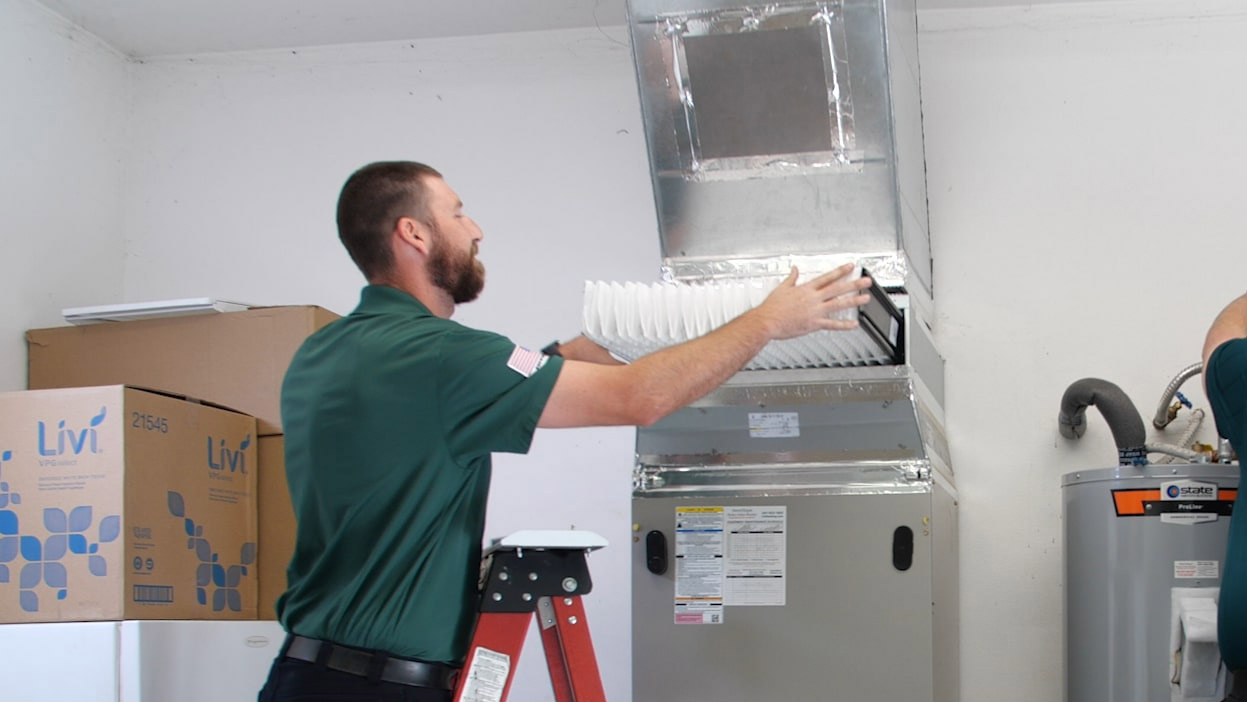
When an air filter becomes clogged, it can restrict airflow and place additional strain on the HVAC system, potentially contributing to overheating or other problems. You can troubleshoot by turning off the system and replacing the filter if it is dirty. If the smell continues after the filter change, you’ll need to schedule a professional inspection.
5. Dust or Debris Burning Off
Faint, dusty odors can occur if the HVAC system runs after it has been unused for an extended period of time. If this is the cause, the odor should be relatively mild and fade quickly.
Burning dust produces a different odor than sharp plastic, rubber, or electrical odors. If you notice the smell lasting longer, becoming stronger, or returning after each cycle, you should shut off your AC and call for service.
6. Foreign Objects Near the Air Handler or Vents
If plastic, debris, insulation, small objects, or construction materials come in contact with overheating electrical or mechanical components, it can produce the smell of burning plastic. Homeowners can visually check around accessible vents and equipment for obvious debris but should not remove panels or reach inside the system.
7. Worn Belt or Rubber Component in Older Systems
Some older residential HVAC systems use a belt-driven blower assembly. Sometimes, the belt can become worn or slip, which can produce a smell like burning rubber or plastic. If this is the case, you’ll likely notice squealing or rattling noises and weak airflow as well as the unusual smell. To resolve the issue, you’ll need to have the blower assembly inspected and the belt replaced by an experienced HVAC technician.
8. Overheating Control Board or Relay
When a relay, control board, or contactor starts to fail, it can overheat and create an electrical odor. Often, you’ll notice clicking noises or intermittent operation. The AC may also fail to respond to the thermostat. Alternatively, the indoor fan or outdoor unit may run at the wrong time. For a professional diagnosis, you’ll need an HVAC technician who has the proper tools and training.
How To Tell Burning Plastic From Other AC Smells
One way you can narrow down the possible causes of the odor is by noting the type of smell. From burning smells to the odor of dirty socks, each scent is associated with certain types of problems.
- Burning Plastic or Electrical Smells: This odor is often due to problems with the AC’s wiring, motor, capacitor, or controls.
- Burning Rubber Odors: Often, this smell happens when there is an overheated moving part, a faulty belt, or a motor problem.
- Musty Odors: This type of scent is often due to mold, mildew, dirty coils, or a clogged drain.
- Chemical or Sweet Smells: An unusual chemical odor accompanied by cooling problems or hissing may warrant an inspection for a refrigerant leak or another HVAC problem.
- Rotten Egg Smells: You may smell rotten eggs if there is a gas-related problem. You should immediately leave your home and call 911 or your gas utility provider for help.
- Dirty Socks Smell: This odor can occur when bacteria or other microbial growth develops on the evaporator coil, often in the presence of moisture.
What Homeowners Can Safely Check
As a homeowner, there are a few steps you can take to try troubleshooting on your own. If these steps do not work, you should reach out to Rogue Valley for professional AC repairs.
- First, turn off your AC.
- Pull out your filter to see if it is clogged. Replace it as needed.
- Look for any visible signs of smoke, sparks, or scorch marks from a safe distance.
- Note if the smell seems to be stronger near your vents, outdoor unit, indoor unit, or the electrical panel.
- Go from room to room to verify that your vents and returns are open and unobstructed.
- Pay attention to any unusual noises, poor airflow, tripped breakers, or warm air. When you call for help, share this information.
- Never remove any equipment panels. Do not touch the wiring or repeatedly restart the system.
When To Call Rogue Valley Heating, Cooling & Electrical
You should call for help immediately if you experience any of the following situations.
- There is a sharp, electrical, or plastic-like odor.
- You see smoke or sparks.
- The breaker keeps tripping.
- The smell returns every time your AC runs.
- There is a buzzing noise.
- Your outdoor unit produces a humming noise but won’t start.
- The AC blows warm air or has poor airflow.
- Your AC keeps shutting down unexpectedly.
If you notice unusual AC symptoms, Rogue Valley can help. Our HVAC technicians and electricians offer local AC repair and electrical services in Grants Pass, Medford, and Southern Oregon. We know HVAC breakdowns don’t happen on a 9-to-5 schedule, which is why we offer 24/7 emergency service. Additionally, our team delivers same-day AC repairs, upfront pricing, and full system inspections.
How a Technician Diagnoses the Burning Smell
Technicians typically diagnose burning odors by performing a full electrical inspection.
- We start by inspecting your electrical connections and wiring.
- Then, we can test your capacitors, relays, contactors, and control boards for performance issues.
- Our technician will inspect your blower motor and outdoor fan motor operation.
- To troubleshoot for airflow issues, we’ll inspect your filters, coils, and ductwork.
- Our team can inspect for melted insulation, overheating, and scorch marks to determine which component is causing the unusual odor.
- Once we’ve found and repaired the problem, we’ll test your system to confirm that it is safe before restoring operation.
How AC Maintenance Helps Prevent Burning Smells
With AC maintenance, you can prevent small problems from escalating into safety risks. During a routine tune-up, our technician will handle the following tasks.
- Inspect electrical connections.
- Test capacitors and safety components.
- Clean indoor and outdoor coils.
- Replace filters as needed.
- Check the unit’s airflow.
- Lubricate serviceable moving parts as needed.
- Inspect for worn motors and faulty components.
Southern Oregon’s dry air, heat, dust, and long cooling cycles can strain cooling systems, leading to premature component failure. With our Greenshield Membership Plan, you can get a complimentary AC tune-up each year and keep your AC functioning at its best.
FAQs
To get a better understanding of why burning plastic odors might occur, read through some of our most frequently asked questions.
Why does my AC smell like burning plastic?
When a burning plastic odor occurs, it is often the result of an electrical problem. For example, this issue commonly occurs because of overheated wiring, a bad capacitor, or a failing motor.
Should I turn off my AC if it smells like burning plastic?
Yes, you should absolutely turn it off. If you notice a strong, persistent, or electrical smell, you should also shut off power at the breaker if you can safely do so. Then, call a professional.
Can a dirty air filter cause a burning smell?
A dirty air filter can limit airflow in your unit, causing the blower motor to overheat. In turn, this can cause a burning odor.
Is a burning smell from an AC ever normal?
A faint, dusty odor that goes away quickly might not be a serious issue. However, you should be concerned if you smell burning plastic, an electrical odor, or burning rubber. In these instances, the best option is to call us for an inspection.
Who should I call for AC burning smells in Grants Pass or Medford?
If you notice burning odors, we can help with same-day AC repairs and electrical inspections. Call Rogue Valley Heating, Cooling & Electrical for help with your AC in Grants Pass, Medford, and Southern Oregon.
Schedule Your AC Diagnostic Service
If an AC produces burning plastic odors, the best option is to immediately turn off the unit. Then, call Rogue Valley for help at 541-204-0966 or schedule fast AC repair services online. At Rogue Valley, we offer safety-focused diagnostics and repairs throughout the Grants Pass, Medford, and Southern Oregon region.
Service Request
"*" indicates required fields