Why Does My Furnace Smell Like Gas
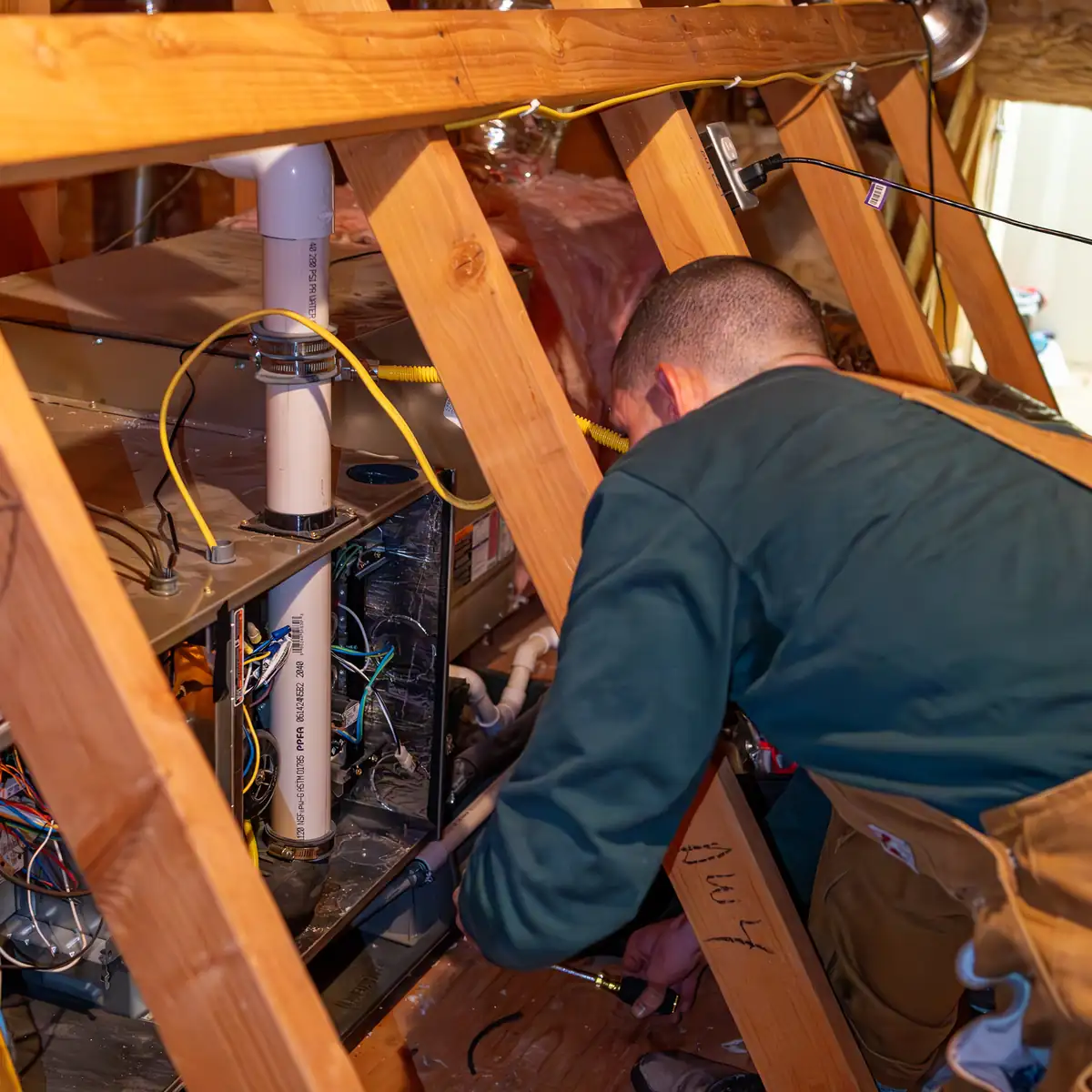
A gas odor around a furnace should never be ignored. Although natural gas is naturally odorless, utility companies add a sulfur-like smell similar to rotten eggs to make it easier to detect leaks. If you smell gas, even briefly, leave immediately. From a safe location outside, call 911, then your gas utility’s emergency line.
To help your family stay safe, we’ll look at what to do right away, common causes of gas odors, warning signs to watch out for, and when you need to call Rogue Valley Heating, Cooling & Electrical for help after emergency responders or your gas utility have confirmed that your home is safe.
If You Smell Gas Right Now, Do This First
For the safety of your home and family, follow these emergency steps immediately. Do not wait to see whether the smell disappears.
- Leave your home immediately with all people and pets.
- Do not turn lights or electrical switches on or off.
- Do not use lighters, matches, appliances, or anything that could create a spark. Do not stop to adjust the thermostat or turn off the furnace.
- Do not use a phone inside. Once you are a safe distance away, call 911, then your gas utility’s emergency line.
- Stay outside until emergency responders or the gas utility confirm that it is safe to return.
Once your home has been cleared, you can schedule a furnace inspection or repair. Do not restart equipment involved in the incident until a qualified professional has inspected it, completed any necessary repairs, and confirmed that it is safe to use.
Is It Ever Normal for a Furnace To Smell Like Gas?
Do not assume a gas smell is a normal part of furnace startup. Any suspected gas odor calls for leaving immediately and following the emergency steps above, even if the odor is faint or brief. The following are additional warning signs, not conditions you need to wait for:
- The odor returns.
- The odor is especially strong.
- The smell persists.
- You hear hissing or whistling near gas equipment.
- The smell spreads throughout your home.
A temporary burning-dust smell when heating equipment first runs after a period of inactivity is different from a gas odor. Do not use that explanation to dismiss a sulfur or rotten-egg smell. If you are unsure whether an odor could be gas, leave and follow the emergency steps above.
If your carbon monoxide alarm sounds or you suspect carbon monoxide exposure, get everyone outside immediately, call 911 from a safe location, and stay outside until emergency responders confirm it is safe to return.
What Does a Gas Leak Smell Like?
Gas can smell like rotten eggs, sulfur, or a skunk. Because natural gas has no smell, the scent comes from the odorant added to the gas. Other possible leak indicators include hissing near gas equipment, continuous bubbling in standing water over a buried gas line, or unexplained dead or discolored vegetation near a gas line. Do not search for these signs or try to locate a suspected leak. Leave immediately and report your concerns from a safe location.
Exposure to natural gas at high concentrations or to combustion byproducts such as carbon monoxide may cause symptoms including dizziness, headache, nausea, or fatigue. If you suspect exposure, get outside and call 911.
It’s important to remember that carbon monoxide (CO) has no smell. Install CO detectors, test them monthly, and replace batteries and alarms as recommended by the manufacturer. A CO detector does not necessarily detect natural gas, so a silent CO alarm does not mean a suspected gas leak is safe.
Common Reasons Your Furnace Smells Like Gas
A furnace can smell like gas due to several different problems. These possibilities are for general understanding, not homeowner troubleshooting during a suspected leak. If you smell gas, leave and follow the emergency steps above before arranging furnace service.
1. A Gas Leak in or Near the Furnace
Gas odors can occur if there’s a leak in a gas line, connection, valve, or furnace component. If you suspect a leak, evacuate immediately. From a safe location outside, call 911, then your gas utility’s emergency line. A routine service appointment is not a substitute for this emergency response.
2. A Pilot Light Problem
Older furnaces typically have standing pilot lights. Pilot or gas-control problems require professional assessment. For your safety, never attempt to relight a pilot if you smell gas. Leave immediately and follow the emergency steps above.
3. Delayed Ignition
Delayed ignition can allow gas to accumulate before the burners ignite, potentially causing a boom or hard start. If you notice a gas smell, leave immediately and follow the emergency steps above. Do not restart the furnace to reproduce the problem. After the home has been cleared, have a qualified technician inspect the equipment before it is used again.
4. Dirty or Misaligned Burners
A dirty or misaligned burner can affect combustion and result in unusual smells. Other signs may include uneven flames, soot, yellow-colored flames, or rough startup. A qualified technician can inspect, clean, and adjust the burners. Do not open the furnace or inspect its flames during a suspected gas leak. A gas odor requires evacuation and emergency reporting first.
5. Venting or Backdrafting Problems
Your furnace’s exhaust gases are supposed to leave your home through the venting system. A blocked, damaged, or improperly installed exhaust system can allow combustion byproducts to enter your home. This creates a serious carbon monoxide concern. If a CO alarm sounds or you suspect exposure, get everyone outside and call 911 from a safe location.
6. A Cracked Heat Exchanger or Combustion Issue
Heat exchanger problems represent a major safety concern and require professional assessment. A damaged heat exchanger can allow combustion byproducts to enter the air circulated through your home. Possible warning signs include soot, a CO alarm, flame rollout, or system shutdowns. Carbon monoxide itself has no smell. Do not wait for an odor if a CO alarm sounds or exposure is suspected. Leave immediately and call 911 from outside.
7. New Furnace or First Startup Odors That Are Not Gas
Dust that settles on furnace components while the equipment is unused can produce a temporary burning-dust odor when heating starts again. This is different from the sulfur or rotten-egg odor associated with natural gas.
Do not assume every startup odor is harmless. Persistent or worsening burning odors, burning-plastic smells, and electrical smells need professional attention. If you smell gas or are unsure whether the odor could be gas, leave immediately and follow the emergency steps above. Do not wait for it to clear.
8. The Smell May Be Coming From Somewhere Else
Other sources, such as a dry floor drain, trash, compost, or another appliance, can produce unpleasant odors. However, do not investigate a suspected gas smell or assume it comes from a harmless source. Leave immediately and contact emergency services and your gas utility from safety. Let qualified responders assess the possibility of a gas leak before investigating other explanations.
Furnace Smell Comparison: Gas vs. Other Odors
Odors can provide clues, but smell alone cannot establish that your home is safe. For any suspected gas leak, follow the emergency steps above. Other persistent, strong, or unusual furnace odors should be professionally inspected.
- Rotten Eggs and Sulfur Odors: These may indicate a gas leak. Leave immediately and report the suspected leak from a safe location, even if the smell is faint or brief.
- Burning Dust: A temporary dusty smell can occur when heating starts after a period of inactivity. This does not explain a suspected gas odor.
- Burning Plastic or Electrical Smells: These odors can occur due to electrical issues or overheating and require prompt professional attention.
- Musty Odors: These smells may stem from dirty ducts, excess moisture, mold, or a clogged drain.
- Metallic Smells: This type of odor may happen when components overheat.
What Not To Do If Your Furnace Smells Like Gas
If you suspect a gas leak, leave immediately. Avoid actions that could create a spark or delay evacuation.
- Do not stop to turn off the furnace or adjust its controls.
- Do not turn switches on or off.
- Do not search for the leak or use a flame to test for one.
- Do not smoke, use matches, or operate anything that could create a spark.
- Do not plug in or unplug equipment.
- Do not attempt gas line repairs or relight a pilot.
- Do not use your phone until you are outside at a safe distance.
- Do not wait to see whether a faint or brief gas odor returns.
- Do not return until emergency responders or your gas utility confirm it is safe.
When To Call Rogue Valley Heating, Cooling & Electrical
For a suspected gas leak, leave immediately and call 911, then your gas utility’s emergency line, from a safe location. Once responders have confirmed that your home is safe, you can contact us for furnace inspection and repairs.
For routine maintenance or furnace problems that do not involve a suspected gas leak, CO alarm, or suspected exposure, contact our team to arrange service. Reasons to schedule an inspection include:
- A startup odor that needs investigation after any suspected gas leak has been assessed and the home cleared.
- You haven’t had your furnace serviced in over a year.
- Your furnace makes booming or popping noises.
- You are experiencing poor heating performance or short cycling.
- Your energy bills have jumped for no apparent reason.
- Your pilot light will not remain lit.
- You have noticed an unusual burner flame during normal operation.
At Rogue Valley, we are a local furnace repair and maintenance team. We serve Grants Pass, Medford, and the surrounding Southern Oregon area. Our experienced team offers 24/7 emergency furnace repairs, upfront pricing, same-day service, and safety-focused diagnostics.
How a Technician Checks for Furnace Gas Odors
After emergency responders or your gas utility have cleared the home, our HVAC technicians can perform checks to diagnose furnace problems.
- First, we’ll test your gas connections.
- Our team will inspect gas valves and fittings.
- We will check your burner operation.
- Then, we will inspect your ignition system and heat exchanger.
- We will test for the presence of carbon monoxide.
- Our staff will check your venting and combustion air.
- Finally, we will review your furnace fault codes and check your safety controls.
At Rogue Valley, our goal is to find the cause of the problem. Gas odors are a serious issue, so it’s essential to discover and fix the source before affected equipment is used again.
How To Help Prevent Gas Smell Problems
Regular maintenance supports safe furnace operation, but it does not eliminate the possibility of a leak. Carry out routine maintenance only when there is no suspected gas leak or other emergency.
- Schedule professional furnace maintenance according to the manufacturer’s recommendations.
- Change your filter regularly.
- Install and maintain CO detectors.
- Keep vents and combustion air openings clear.
- Never attempt DIY gas line or furnace combustion repairs.
- Keep flammable items and clutter away from your furnace.
- Arrange professional service for changes in performance or unusual noises. For any suspected gas odor, evacuate and follow the emergency steps above instead of waiting for a service appointment.
FAQs
To explore why gas odors occur and what to do, check out some of our most frequently asked questions.
Why does my furnace smell like gas when it turns on?
A gas smell during ignition can indicate a leak or ignition problem. Do not assume it is normal or wait to see whether it clears. Leave immediately. From a safe location outside, call 911, then your gas utility’s emergency line.
Is a rotten egg smell from my furnace dangerous?
A rotten-egg or sulfur smell can indicate a natural gas leak. Immediately evacuate your home, even if the smell is faint or brief. From a safe location outside, call 911, then your gas utility’s emergency line. Stay outside until responders confirm that it is safe to return.
Can I relight my pilot light if I smell gas?
No. Do not relight the pilot, adjust the thermostat, or operate furnace controls. Leave immediately and call 911, then your gas utility’s emergency line, from a safe location outside.
Does carbon monoxide smell like gas?
No. Natural gas is odorless, but utilities add an odorant that produces a rotten-egg-like smell. Carbon monoxide is odorless and invisible. Keep working CO detectors installed in your home, and remember that a CO detector does not necessarily detect natural gas. If a CO alarm sounds or you suspect exposure, get outside immediately and call 911.
Who should I call for furnace gas smell problems in Grants Pass or Medford?
Leave your home immediately. From a safe location outside, call 911, then your gas utility’s emergency line. Once responders have confirmed that your home is safe, you can call Rogue Valley Heating, Cooling & Electrical at 541-204-0966 to schedule furnace inspection and repair services.
Protect Your Home From a Furnace Leak
If you suspect a gas odor, leave immediately. From a safe location outside, call 911, then your gas utility’s emergency line. Stay outside until responders confirm that it is safe to return. After the area has been cleared, reach out to our team at 541-204-0966 to schedule an inspection. Do not restart affected equipment until a qualified professional confirms that it is safe to use.
Contact us for furnace repairs and inspections in Grants Pass, Medford, and Southern Oregon after any immediate emergency has been addressed.
Service Request
"*" indicates required fields