Why Breakers Trip More in Winter (And What It’s Trying To Tell You)
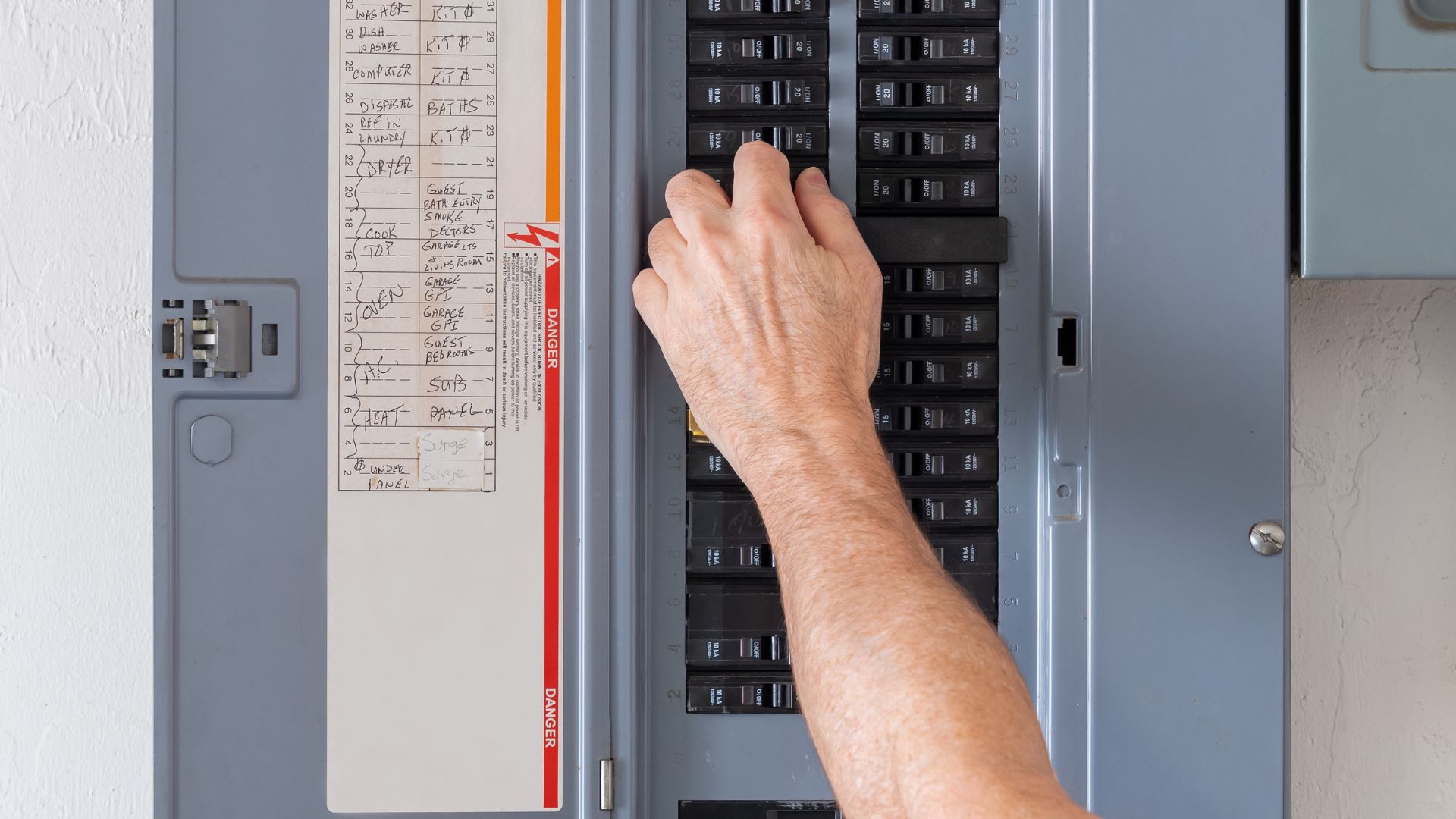
It’s chilly out, so you plug in the heater to warm up. Suddenly, your lights blink and the breaker trips.
While this might seem like a problem, the reality is that the breaker tripping is a safety feature designed to protect you. There are safe changes you can make to your home to prevent tripped breakers. However, if this continues to happen frequently, you should reach out to Rogue Valley Heating, Cooling, & Electrical for professional help.
What a Breaker Trip Actually Means
Breakers shut off power when they detect a short, ground fault, or overloaded circuit. This is more likely in winter because demand for electricity is higher.
Important Safety Note: Resetting the breaker once is fine. Repeatedly resetting it without determining the underlying cause is a major safety hazard.
The Big 3 Reasons Breakers Trip More Often in Winter
There are a few main reasons why breakers trip more in the wintertime.
Reason #1: Space Heaters and High-Wattage “Quick Heat” Devices
A space heater pulls a lot of power, especially as you crank up the temperature setting. When added to the rest of the gaming consoles, televisions, microwaves, and hair dryers on the same circuit, this can lead to problems.
Reason #2: Aging Circuits and Older Electrical Panels
Older homes weren’t designed for all of the electrical devices and appliances we have today. Worse still, breakers and wiring can become worn and sensitive over time. Plus, a lack of dedicated lines and limited circuits per room can lead to overloaded circuits during the winter.
Reason #3: Loose Connections That Act Up When Temperatures Drop
Finally, falling temperatures can cause metal to contract. This results in loose connections, which create resistance, heat, and power issues. Combined with a higher wintertime electrical load, this creates potential hotspots and causes a danger to your home.
Common Winter “Trigger Scenarios”
When multiple devices are used at once, it can lead to tripped breakers. In the winter, the following trigger scenarios are fairly common.
- Using a heater, holiday lights, and a TV in the same room
- A heater hooked up to an extension cord or power strip
- A coffee maker that runs while the heater is on
- Garage and outdoor circuits using heaters, tools, and freezers
- A bathroom or bedroom heater tripping the breaker once it’s switched to high
Overload vs. Short vs. Ground Fault: How It Looks at Home
To tell if it is an overload, short-circuit, or ground fault, consider the following signs.
Overload Signs
You can tell if it is an overloaded circuit if it trips within a few minutes of running or after extra devices are added.
Short-Circuit Signs
Short circuits happen right after something is plugged in or switched on.
Ground-Fault Signs
These occur when moisture is present, such as in outdoor areas, bathrooms, kitchens, damp basements, or garages.
Space Heater Reality Check
Space heaters are a major fire hazard. Through a few safe habits, you can make sure your space heater is used safely.
Safer Heater Habits
- Always plug space heaters directly into wall outlets. Never use power strips.
- If it is a shared circuit, keep the space heater on a lower temperature setting.
- Try to limit each circuit and outlet to one high-watt appliance.
- Turn off the space heater if you are sleeping or not in the room.
- Make sure there is a three-foot clearance around the space heater.
What Not To Do
- Don’t daisy-chain extension cords.
- Don’t use space heaters as a long-term solution.
- Don’t repeatedly reset the breaker.
The “Quiet Warnings” You Should Not Ignore
Watch out for quiet warning signs. Immediately stop using the circuit and schedule professional electrical repairs as soon as possible.
- Repeated breaker trips, even when the load is small
- Warm outlets and switches
- Flickering lights when appliances turn on
- Burning odors
- Buzzing or crackling sounds
- Discoloration around the outlet
- Sparking
Safe Steps Homeowners Can Take Today
If you are experiencing tripped breakers, there are a few proactive steps you can take right now to ensure the safety of your home and loved ones.
- Unplug the last device you just plugged in to see if the circuit still holds.
- Try reducing the load. For example, move the heater to a different outlet or circuit.
- Run fewer high-watt devices at the same time.
- If your space heater is old, damaged, or has a frayed cord, get a new one.
- Record which breakers and devices were involved. Track the time of day as well.
When It’s Time To Call Rogue Valley Heating, Cooling and Electrical (Or a Licensed Electrician)
It’s time to call for electrical repairs if you notice any of the following issues.
- Breakers trip repeatedly during normal winter use.
- Sections of your home keep losing power.
- You have to use space heaters every day.
- The home has an older panel or not enough circuits.
- There are buzzing noises, flickering lights, unusual odors, or heat.
Winter Trips Are Common, but They’re Not “Normal” To Live With
While winter trips are a common occurrence, they aren’t normal and shouldn’t be something that your family has to live with. Space heaters, loose connections, and aging circuits can all contribute to this nuisance. By making a few smart changes and scheduling a professional electrical inspection, you can avoid tripped breakers this winter.
For help with your tripped breakers this winter, reach out to Rogue Valley Heating, Cooling, & Electrical. We’ll determine the cause, so your family can enjoy a safe, steady power all winter long.
FAQs
Why does my breaker trip only when it’s cold outside?
When it’s cold, metal contracts. This potentially loosens connections and wiring, causing shorts. Additionally, many people use space heaters, electric blankets, and other items in the cold that can overload breakers.
How many space heaters can I run at once?
In terms of safety, you should only be using at most one per breaker. Realistically, you should consider an HVAC upgrade if you feel the need to use more than one space heater. If your furnace or heat pump can’t keep up in the cold, it’s time for an upgrade.
Is it dangerous to keep resetting a breaker?
Yes, it can be. If your breaker keeps tripping all the time, it indicates that there is an underlying problem with the circuit panel, electrical wiring, or appliances. Continuing to reset the breaker increases the likelihood of damage, electrical hazards, and fires.
Why does the breaker trip instantly when I turn something on?
There is likely a short circuit or ground fault occurring. Damaged wiring, moisture, and faulty appliances can all cause the breaker to trip repeatedly. To avoid causing a fire or additional damage, reach out to our team of experienced electricians for professional help.
Do I need a panel upgrade if breakers trip often?
Possibly. While there can be other causes of this symptom, it’s also possible that you are overloading the panel and need to upgrade. To find out the best option for your situation, reach out to our team for a detailed inspection.
Service Request
"*" indicates required fields